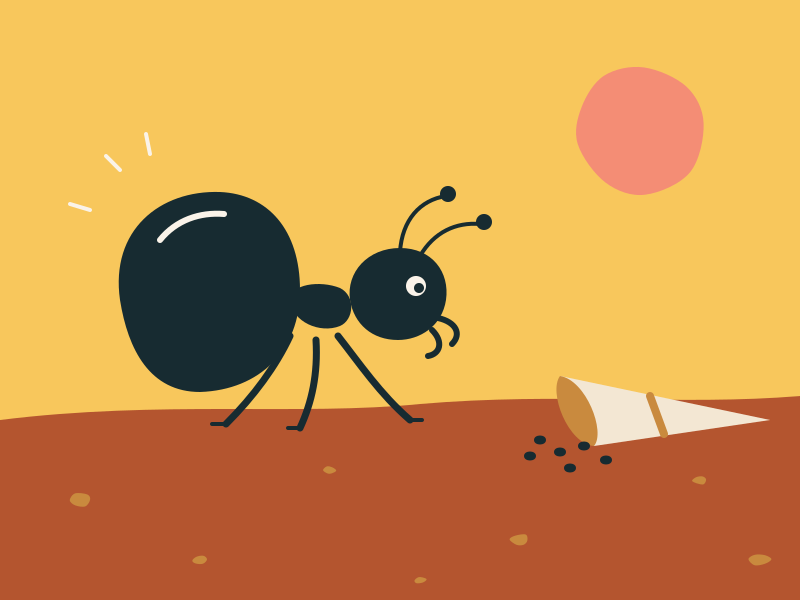
They're sold in little bags by the roadside and in shops: toasted, crunchy, salty big-bottomed ants. For people from Santander they're identity, not novelty; they even get posted to relatives abroad as a taste of home.
The tradition goes back to the Guane people. Farmers head to the nests early during the season, especially April and May with the rains; then the ants are soaked, stripped of wings and legs, salted and fried in their own fat.
The hostel has run tastings before, but we can't promise one: ask the desk whether there's one on or where to buy them.
What it feels like
One second of doubt, a crunch, and then: 'huh, not bad'.
Ideal for
- Food-curious travellers
- An edible souvenir
- A story to tell
Facts with sources
- Season
- Traditionally harvested in April and May, in the rainy season, when they leave the nests.Source 2
- Where
- San Gil, Curití and Barichara are production centres; there's an ant sculpture in El Gallineral park.Source 2
- Preparation
- Soaked, wings and head-parts removed, left in salted water, then fried in their own fat.Source 2
- A taste of home
- Sold to travellers along Santander's roads and a classic gift for people living away.Source 3
What we don't know yet
We'd rather say so than make it up. The team confirms these with the operator:
- Whether the hostel has a tasting coming up
- Where to buy them out of season
Ask the front desk
- Where can I buy good ants in San Gil?
- Any tasting planned this week?
- Is it the season right now?
Safety & season
If you're allergic to shellfish or insects, go carefully or skip them.
Sources
- @thisiscolombiahostel – weekly schedule highlight & creator collabs (per Peashoot intake notes 2026-10-21, not re-opened) (opens in a new tab) — Instagram, retrieved 22 Oct 2026
- Hormiga culona, sabor y tradición (opens in a new tab) — Colombia Travel (ProColombia), retrieved 22 Oct 2026
- La hormiga culona: historia y tradición (opens in a new tab) — Alcaldía de San Gil / Instituto de Cultura y Turismo, retrieved 22 Oct 2026